Followers

Sunday, July 25, 2010

Mystical Ingredient – Episode – 9: People Paradigm

In this episode I wish to continue the various people paradigms which enable the leader to get the best out the people to achieve the organizational goals. In my previous episode-8, I dealt with 4 paradigms and here I am continuing the paradigm-5 onwards.

Paradigm – 5: Performance assessment

One of the most sensitive aspects of people management is assessing their performance and giving feedback. Let us appreciate what is performance before we venture on assessment. An Organization is a constellation of people with different roles & responsibilities assigned to achieve an end result which could be financial and non-financial. Normally the complex network of people is structured with departments with functional roles which in turn become a value chain to convert the customer requirements into a value added product or service.

You may like to look at a simile such as a cricket team which has independent roles and interfaces governed by rules of the game. In a similar manner, an organization is also a game with roles and rules. If the organization has to perform, all individuals have to perform. Hence performance is nothing but achieving the intended goals at the end of the year.

In order to assess the performance of an individual, we need to set the expectations in the form of job descriptions and deliverables at the beginning of the year. A loosely wired organization, vaguely defined JD and absence of KRA (Key result areas) setting in the beginning of the year are generally the root causes for the people dissatisfaction and poor performance. I am of the view that if the people are not performing, the leader is responsible.  I wish to borrow the “GEM” ideology from Swami Shukabodananda to explain the role of the managers in getting best performance from their people.


“GEM stands for Goal setting, Empowerment and Measurement. The first step in GEM is Goal setting. Every human being is keen to make a difference in this planet and feels happy when he/she creates something new. The statistics shows that the people satisfaction levels and hence attrition is low in companies which has a lofty vision and engagement of the people. If the Leader has no vision the whole organization starts rotting and people have no sense of direction. The Organization goals are then deployed as individual goals till we reach the lowest level in the rung of the ladder for which techniques like Policy Deployment are helpful.

Having set the goals, the leader is expected to ensure the Empowerment part of the GEM. What is empowerment? I wish to use Juran’s Self-control to explain empowerment.  Dr JM. Juran defines Empowerment through three things which are important for any people to deliver what is expected from them:

  •  He/she knows what the result/outcome they are supposed to deliver and when.
  •  They should know how to operate through the process and identify when things go wrong.
  •  They should have the authority and knowledge to set things right or stop producing defective output.

Don’t you think that the Leader cannot blame people if he has failed to empower them through training, hand-holding, providing facility and authority?
The third aspect of GEM is Measure of performance - MOP and providing feedback. For vast majority of the processes, we have no measure of performance and we judge people subjectively without any data which leads to dissatisfaction. Driving an organization without MOP is like driving a motor car without a fuel indicator. Hence for effective performance management, the Leader has to apply GEM principles.


Paradigm-6: Potential Assessment

It is very difficult to describe what is potential and how to identify although HR experts have devised several theories and models. Referring the Thesaurus of potential, you find synonyms such as likely, probable, promising, doable, feasible, on the cards and viable. My understanding of potential is the “Hidden abilities of a human being yet to be manifested – it is a seed which has the potential to germinate and bear fruits”. Having attempted to define Potential let us look at the context of People Paradigm important to Leaders for the development of the organization.

Unlike performance which is a short term need of an organization, identifying the potential is the need for building institutions. It is paradoxical if I say “All performers may or may not have potential; and all potential people may or may not perform”. This statement clearly brings forth the distinction between Performance and Potential. In other words performance is what a person achieves in the present and potential is his/her ability to discharge higher responsibilities. ”Performance is a being and potential is becoming”. The following anecdote from Matshushita the founder of National brand will clarify (as stated by him from his book “Not for bread alone” written by him when he was 91 years old)

“Someone asked me how Matshushita Electric Company became a multi-national. After studying only up to second grade, I was working for Osaka Electric Company as an operator. Right from childhood I was curious to create something new and I sketched a concept of a new switch and proudly showed it to my supervisor requesting him to develop this as a product by Osaka Electric Company. He curtly answered me that I was not hired for designing their products. I felt why not I start my own company and had the audacity to commence an electric company with a missionary zeal to improve the quality of human life through electric appliances. Ever since I commenced my company, every year I found at least 3 people emerging as potential CEOs. In order to retain them I made them as entrepreneurs asking them to commence our overseas operation and that is how Matshushita Electric Company became the multi-national”

What a great Leader with no B-school education was able to identify the potential of people and build institutions. Many organizations today don’t have a process to identify and develop the hidden potential of people. There are few Indian corporate which has examples for potential identification as their CEOs are home grown:

Mr. KK.Nohria CMD of Crompton Greaves, Mr SM.Trehan MD of Crompton Greaves, Mr AM.Naik CMD of L&T are all the examples of leadership to identify and mentor the potential of people. They have all joined as trainee and grown up to the highest rung in the organizational ladder. Can you imagine they have superseded over 11,000 people and retained their position?

In summary:

  • All human beings have the potential of different degree waiting to blossom.
  • Nature wants variety and hence it will create new possibilities
  • Swami Vivekananda was hidden in Narendra, Mahatma was hiding in Mohandas Garamchand Gandhi and so on
  • Looking for performance only is a myopic view of a leader; searching for potential is the characteristics of a Level-5 leader.
  • Performance focus helps organizations to survive; potential focus builds multi-nationals.
  • You don’t know what giant is hiding in you! Don’t be satisfied with what you are as what you could be may be a great possibility.

The people paradigm will continue.
Love
Jai Gurudev
NC    

Sunday, July 11, 2010

Mystical Ingredient – Episode- 8 – People Paradigm

In this series “Mystical Ingredient for a successful Leadership”, we have discussed many leadership qualities any common man can develop to emerge as a CEO of any corporate. This series is nothing but portrayal of all the mistakes I did in my corporate career combined with my observations of the qualities of many successful leaders in my consulting career & the few CEO coaching I do these days.

One of the greatest ingredients for successful leadership is “How one relates with the people around them?” which is the result of their paradigm about the people. This is the main topic of discussion in this article. I request my patrons to read this article not only with a perspective of developing their leadership skills but also with an aim to improve their relationship with their loved ones or any people with whom they interact. I am of the view that our behaviours in our adulthood are the result of our childhood conditioning. This is the findings of many gurus of human psychology such as William James, Sigmund Freud and many others. Here is an anecdote from my personal life to illustrate what I am referring. 

“I grew up in a large family of 11 observing my father as a tyrant whose territory the people dare not to tread in. He was a terror to many people as that is the personality he possessed and got away with it successfully throughout his life. Unfortunately, for any male child the father is the first person through whom he understands the world and unconsciously role model them. Among the many good qualities which have become the foot print of my dad, by default I unconsciously took the aggressive behaviour as a feature in me. This aggressive behaviour did not work well with my loved ones and became an impediment for my growth in my professional career till the mentor arrived and corrected on time.”   

This anecdote gives you an idea how our paradigms shape up our ability to deal with people and decide our destiny. Please remember, as we grow in our corporate ladder we need the enrolment and support of people to deliver results as we have less “doers” role as we climb up. I wish to present few paradigms about people which I consider of paramount importance for getting best out of people. Paradigms are the attitude one can choose with respect to any aspect of life; it is the philosophy of choice that we make and all our behaviours will manifest from this philosophy.  I shall provide few anecdotes wherever appropriate by referring great leaders I had come across.

Paradigm-1: “Law of Universe”
This universe is designed as a “Spontaneous Organization” which does not require a “Manager to run”. Looks complex to start with? Our understanding is for successfully running anything we need to supervise and manage. If you look at anything in nature, be it the rain forest, day & night, seasons, planetary motions, formation & destruction of nebulae and so on, everything happens without any external controls. As we believe that everything needs to be controlled, we have created an entity called “GOD” and safely put the responsibility on Him. Please don’t take me wrong that I am atheist. In reality we find that the whole universe is designed as a self sustaining mechanism and it is impossible for someone to oversee and give decisions for tsunamis or earthquakes or seasons to happen. They are all governed by few laws and they are self-sustained in nature.

The message from this paradigm is “Everything in this universe are interlinked and interdependent” for existence. Thinking that one is superior than the other is foolishness as the spoke is as important in a bicycle as the hub and rim. It is important to develop a paradigm that the leader needs everyone to do their bit to make a successful outcome. In fact the Leader are the “Non-Doers” and “Doers” at the same time as he makes things happen without doing anything himself. As the leader is dependent on the people resource, respecting this law of universe makes them humble.

Paradigm-2: “People are creation of Good”
As Ishikawa in his book “Total Quality Control” has written that there are two paradigms about people as it is stemming from the religious beliefs. The western philosophy believes that “Human are creation of evil” and the eastern philosophy believes “People are Devine in human form” – two diametrically opposite paradigms. How this has got anything to do with our ability to manage people?

Most of the western management principles are stemming from the philosophy that “Human is a creation of evil” as it states that if you leave people alone without supervision they will involve in destructive activities. This paradigm is evident in the organizational structures and systems that were developed from the western countries which has “maker-checker” and inspection based. The Ford production system of the earliest automobile manufacturing believed in “Thinkers & Doers” – few intelligent people to think and create a process and rest of the dumb people to produce.

On the other hand, the Toyota Production system coming from the philosophy that “Human is a creation of good” and once they are aligned well with the vision of the company they don’t need any supervision. The concept of supervision based structure is very rare in a Japanese company. Most successful leaders have a very positive feeling about people working for them.

Paradigm-3: “Forming Opinions & Judgement”
I am the believer of Freudian theory that People manifest behaviour driven by their values. In a heterogeneous culture in India we have multi-various and diversified values. One of the negative characteristics of the leader is developing quick opinion and judgement about people. It is extremely difficult to remain in an unbiased manner without the influence of language, religion, caste and creed of our subordinates attracting and creating a comfort levels for us. There are many leaders who had succumbed to this weakness and created a poor image for themselves.

This characteristic of a leader divides people and starts developing different layers in the organization. I am of the view that every human being has equal opportunity to be a successful contributor if he/she is mentored and developed. If someone is not performing the leader must examine what way his/her leadership is the cause for the poor performance. Passing early judgement without examine the leadership style is a sin that is to be eliminated for creating a good climate.

Paradigm-4: “Hiring Heart & Head”
I grew up in Chennai in TVS culture as my formative career was spent with them for 17 years. Mr TS.Krishna, the chairman of Lucas-TVS in early 70’s is known for his Leadership who always believed that “TVS hires the heart and not the head of the people”. What does this really mean? It will become evident from his daily routines. As a chairman he need not have to clock in at 7.15 am when the company starts, but always he was found standing & greeting people in the main gate from 6.45am onwards. He knew all 3000 people’s name and their family history. This includes who is not well and what their off-springs are studying and so on. 

His daily routine also includes eating breakfast in the canteen along with all workmen and walking through the shop floor every day and enquiring the well being of the workmen. TVS always believed that if their employee’s heart is happy then they will do their best to the organization. This gives focus for the leaders to give importance to the emotions of their people instead of believing that their head is only hired. It is coming from the paradigm that if we have genuine interest of the well being of the people they will form as an asset to our organization. I wish to share the following to reinforce my point:

“Shekhar Mane has joined our organization (SSA) as accounts assistant few years back. as an unassuming and soft spoken youngster. We employed him more as a account keeping person looking at his deceptive profile. Now over the last few years he has developed his stature to control our finance function significantly contributing to our performance. His growth in stature is a result of his efforts combined with our keenness to bring the giant sleeping in him. He is enjoying his career with our team as we respect the head and the heart together"
I am not concluding this episode as many more people paradigm is due to be shared with you.
This episode will continue next week.

Jai Gurudev
NC
  

Sunday, June 13, 2010

Mystical Ingredient – Episode 7 – Resource Myopia

What is “Resource Myopia”?

Before I plunge into the next magical ingredient “Resource Myopia” that makes the leaders, let me explain what is it all about which will help my readers to appreciate this episode. Psychology has identified 11 mental blocks that prevent human beings to become a “Possibility Thinkers” and one of them is “Resource Myopia”. 

Let me explain in detail before we could explore how to overcome it: The Oxford dictionary meaning of the word “Resource” is:


  • “A supply of an available asset to be used when needed.
  • A strategy for dealing with difficulties; the ability to find such strategies.
The word “Myopia” has the following connotation:
“Short sightedness”
 – Right under your nose but not seen!

From the above explanations you may appreciate that “Resource myopia” is a short sightedness of available assets that can be used to achieve whatever you want. The moment if we are asked to accomplish something, we all respond “I don’t know how to do it” – we come from the paradigm that if we don’t know how, we cannot achieve what we want? If I say you can accomplish whatever you want even if you don’t know how to do it, you may give a dirty look at me! Let’s look at the anecdote below:

If you don’t know how to make “Tandoori chicken” and if I ask you to make it, you have two options – one is telling me you don’t know and another is surfing the 2000 plus websites to figure out how to make a good Tandoori chiken and use the best recipe! In the first option you are resource myopic and in the second option you are not.


John F Kennedy in mid 50’s announced his vision for America as “We must land the man in the moon and bring him back alive before the end of the decade” When he proclaimed this he or the NASA did not have any clue how to reach a place which is 3,50,000 miles away crossing the empty space and land & take-off without a run way. No single man on earth can come with a design of a lunar system that will make JFK’s dream a reality. “The land of possibility” made it by overcoming the resource myopia. The obvious response of a common man is to write a thesis how and why it is not possible! Only people without “Resource Myopia” can make this.


NASA developed all systems required to make JFK dream a reality with the available assets in this planet. Where it all came from?

  1. Possibility Thinking – my previous episode
  2. Overcoming Resource Myopia – short sightedness of available resources.

Accomplishing without knowing is the secret of successful Leadership. In other words not knowing is an asset than a liability. It is paradoxical to know:
“Who don’t know how to do it have a dream and the mass who knows how to do it have no dreams!” Kennedy had a dream but did not know how to do it; the scientist of NASA knew how to do it but had no dream!” In other words the leader is paid for dreaming and inspiring the team to achieve his/her dream.

Vast majority of us feel shy of saying that “we don’t know” – please remember “not knowing is an asset and not a liability as the Leaders don’t know how to do it, but know how to get their things done through the abundant resources available in this universe”. In fact knowing who can do it for you is more valuable than knowing to do it yourself – after all how many things you can know yourself?

The Curiosity for Novelty:
One of the characteristics of this universe or nature is to conceal its secrets and reveal to those who search. The word Research means searching something that already exits - that is why it is re-search! As a child we had a tremendous curiosity to know everything we came across. As we have grown, somewhere down the line we lost our curiosity to know new things. The novelty is lost as we started thinking that “we know all that we need to know”. Alas what a foolishness to conclude that we have unravelled all the secrets of life! Avvaiyar, one of the legendary Tamil poet lived several hundred years ago said “what we have learned is like a speck of a sand in the beach and what we don’t know is the rest of the sand in this universe” .


Swami Vivekananda once was browsing through books in a Library in the US. The Librarian believed to have sarcastically commented to him “you seem to have read all the books in the library today”. Vivekananda answered him “Yes, you may like to test that by asking questions in any books in the Library”. The Librarian was shocked to see Vivekananda answering any questions from any books. He finally touched his feet and asked him how it is possible? Vivekananda replied “some people read word by word, some read sentence by sentence, some read paragraph by paragraph, some read page by page and I read ‘book by book’

It may appear that Swami Vivekananda was arrogant while he answered the librarian. It is not the audacity of this great man to think that he has absorbed all that is there in the library. The same Vivekananda said “If you show me a speck of sand and ask what it is? I may say it is sand! If you ask me further what is sand? I may say silica. If you ask me what is silica and if I happened to be a physicist I may explain the atomic structure, but if you ask me why the atoms are that way, I may not be able answer beyond! Even a speck of sand is un-explainable beyond a point how can we explain the sun, star and nebulae?” This is the question Swami Vivekananda asks to prove the point the secrets of nature is un-fathomable.

It means that don’t try to know everything and it is not a sin not knowing. For example “the cockroach is not designed to know nuclear physics but designed to withstand the nuclear exposure which none of the rest of creations could do” This only means you have your own strengths and weaknesses and your success depends on how you use your weaknesses as strength.

What is the main Point?
If you cannot find an answer for vast majority of things in this universe, does that mean we cannot achieve what we want? Most of the Leaders who have accomplished great results are the ones who have limited knowledge in the area where they have accomplished! The question that comes in your mind now is:
How can I accomplish without knowing much about the subject where I am working now?

If Boeing has put 2 million components and systems together in an aircraft to stay in the sky, does that mean the CEO Mc Nerney is a superman who knew everything about the aircraft design and manufacture? Is it humanly possible to know everything needs to be known by a single human being? The answer is no as the nature has not planned this universe that way. The sum total of the universal knowledge is available as a reservoir for you to access and you will only if you have no “resource myopia”

Entrepreneurship:
98% of the Indian industries are MSME’s (Micro, Small & Medium Enterprises), founded by entrepreneurs who knew how to do thing? For example, if I know how to make sheet metal components, I start a sheet metal making industry. These industries still remain MSME’s for decades with a stunted growth for the simple reason they were founded by someone who knew “How to do things”. If you look at the balance 2% of the corporate are founded by people who had no clues about what they were making. For example, T.V.Sundaram Iyengar who created a great institution TVS Group in the south was from a pious Brahmin family – TVS is a symbol of quality today silently making this country proud as the first company to get the coveted Japanese Deming award.
                                                                                     Dhirubhai Ambani
The founders of great institutions are the ones who had no knowledge in the subject matter on which they founded their organizations. Dhirubhai Ambani did not know how to make synthetic fibre or crack petroleum but created the largest wealth for himself, the common man of this country and made his off-springs as one of the top 5 wealthiest people in this planet within his own generation. Dhirubhai had the dream and knew who can make it a reality for him. He did not have the “Resource Myopia” which we have all plagued with.
                                                                                     Benjamin Franklin
What is the main lesson?
1. The universe by design is to conceal all its secrets and reveal for those who are willing to   
     “Search” – Electric bulb for Edison, electricity to Benjamin and so on.


2. “Curiosity is the mother of invention” and not as the famous adage says “Necessity is the  
     mother of invention”. Never ever lose the child like “curiosity” in life and retain your Novelty till  
     the last breath.


3. One cannot know everything in this universe as that is not the plan of the nature.  Not knowing 
     something is not a sin. Don’t feel inadequate or shy when you don’t know something.


4. What you don’t know; it is known to someone and they can fix it for you. You will find the right 
    resource if you don’t have “resource myopia”. For example whom do you approach when you 
    are not well? Obviously the doctor – why? You are sure he can fix it for you.


5. The whole universe is flooded with resources and will be visible only when you are free from 
     resource myopia.


6. All that you need is the “Dream” and free from “Resource myopia” – the rest of it will be a 
     history how you made it as JFK landed the man in the lunar surface.


7.  A Leader has a dream, finds the right resource, inspires them to share his/her vision and 
      achieves something great for humanity.


8.   Next time if you feel you don’t know how? – Recognize it is an asset and not a liability as the 
       rest of the universe is waiting to convert your dream to a reality.        
    Jai Gurudev
    NC   

    Sunday, June 6, 2010

    Stature – Mystical Ingredient – Episode 6- Possibility Thinking

    What is possibility thinking?
    Possibility thinking believes that you are the integral part of this universe which continuously creates variety of species, flora & fauna, stars, nebulae and so on. One philosophy is “you are created and brought here without your consent and as a helpless creature governed by karma”; the other school of thought is “you are the creator itself as you came from the same intelligence that brought this universe to its existence”. If you believe the former philosophy, you are swayed by the wind like a boat without sails. If you believe in the latter, you take charge of your life like a captain of your soul. The possibility thinkers are the ones who believe that they are the creator of their destiny and feel there is no boundary for future as there is no boundary for this universe which even science is yet to find.

    Why we are what we are?
    Psychology says that our personality is a function of what happened in our formative years in childhood from 10 months to 3 years. The legend in modern psychology Sigmund Freud says that our “Script” of life is written during these crucial formative years. The following anecdote will clarify the point.

    I happened to facilitate a Personality Development session long time back in which Suresh (name disguised for confidentiality) shared his life’s ambition as “To Show to the World that he is somebody and he will achieve this by owning a Mercedes someday”. Upon digging deep into his childhood, he narrated an incident as follows:

    “My dad suddenly died when I was 2 years old leaving me and my mother without any means for livelihood. My mother without any means to survive, carried me in her hip and knocked the doors of her brother’s home at midnight – the only asylum she was left with. My uncle was shocked to see us standing helplessly and drove us away mercilessly saying that he had no means of supporting us! That was the day I decided to prove my worth to this World”

    This incident in Suresh's life created an operating system in his sub-conscious mind which was running all his life “to prove himself” thereafter – which Sigmund Freud calls it as script. It is also a fact that vast majority of us are living life like Suresh as we have no means of knowing our scripts. If “Script” is the programme or operating system that runs our life like computer helplessly responding the way in which the program was written, all human beings would be robots and would not have produced great leaders.

    What is the main point?
    The subject matter for me in this episode is to explore “Are we the product of our circumstances or do we have a choice? – What do Leaders do to challenge their “Scripts”? Leaders are possibility thinkers and hence their past has no influence on them. Let us examine what is possibility thinking? In simple terms Possibility thinkers are “Future focused” and followers are “Past focused”. Suresh chasing a Mercedes to prove himself is a typical example of “Past focused” – there is no one in this planet to prove as “everyone of us are trying to prove to a non-existent entity and no one is interested or having time to notice who achieved what?” I wish to refer to a Zen story to illustrate this point:

    “There was a Zen master living in a monastery where many people used to visit. After worshiping him they used to stand outside the monastery and exchange their pleasantries & problems with each other. There was a blind beggar sitting outside who used to listen to their conversation. The beggar being blind, his listening was quite strong to capture the inner dialogues of the people while they were sharing or listening. The Zen master one day died and there was a condolence meeting in which the beggar was invited to speak along with many of the devotees. The beggar spoke as follows:


    “I was listening intently while people were sharing the events of their life with each other. Whenever one shared happy news I found the other person congratulating in words but fuming and fretting in his heart due to jealously. Similarly whenever one shares his problems the other was responding with sympathizing words; but feeling happy internally that it had not happened to him. I could get the inner feelings from their tones. But I found whenever the Zen Master responded he was happy when he heard happy news and really sad when he heard sad news. In other words he was “authentic” and the common men are “hypocrites” – and that is the difference between the ones who have “arrived” and the vast majority who are in the maze of mundane ephemeral life.


    The above story proves the point that there is no one in this universe who is waiting to acknowledge our achievements and trying to “prove ourselves” to this non-existent entity is like chasing the mirage and leave nothing behind to the legacy. The Leaders never try to prove themselves but keen to make a difference in this planet.

    Human beings can be classified into two major categories – the one who always wants to challenge what life has to offer and the other believes in fate and karma who generally succumb to them eventually. Some of us are on the side of the “problems” and some of us are on the side of the “solutions”. The leaders are generally the “possibility thinkers” which is my main topic of discussion today.

    The Possibility Approach:
    Possibility thinking believes that everything is coming from “Sunya-nothingness” (sunya is a Sanskrit word for nothingness). Looks complicated? Let me explain with an example. Where was the cell phone before its invention? The answer will be “Nowhere” Is it not? Where was this universe before big bang? Nowhere again! Vedanta says everything is in its “Un-manifest” form and comes into “manifest” form. The mango seed is the “un-manifest” form of the mango tree! We are in the planet now; where we were before birth? The answer is the same - everything from "Nothingness"

    Another characteristic of possibility thinking is “Everything is cyclic”. Before Galileo’s time people believed that earth is flat and if we continue to travel in one direction we may fall out of it!! Galileo was poked in his eyes for challenging this belief and unfortunately for him there were no satellite image of earth to show what he was saying! Now we know that we can fly to US from India via east or west. In the universe we notice all phenomena are “Cyclic” – the day & night, seasons, planetary motion, flora and fauna, and so on. Science also confirmed this through “Law of conservation of mass or energy” which says energy or mass can neither be created nor destroyed and they can only be changed from one form to another. This is what I mean by "Cyclic" - No beginning and end! One cannot show where the beginning and end in a Globe.

    In essence, a Leader always believes that he can create anything from nothing and moves forward keeping his /herattention always in the side of the solution and not on the side of the problem as a common man do. Creating something out of nothing offers lots of “ambiguity” as future is unknown. It is always easier to run life through “Script” as nothing is “ambiguous”.

    Allergic to Ambiguity:
    One of the Blocks psychology identified is “Allergic to ambiguity” which means that we get intimidated by the lack of clarity of an un-born future which has full of possibilities. Vast majority of us are capable only in “conforming” situations which are quite familiar to us. I dealt this in detail in my earlier topic “Rocking the boat”. Overcoming the intimidating feeling due to lack of clarity is the ability the leader develops over a period of time. Let us look at a simple scenario the leader faces – How big the business can grow? How to enrol the people for the common vision of the company? Is it not an ambiguous situation to answer these questions? Like these the Leader faces lots of questions on a daily basis; in other words “Ambiguity” is the order of life for a leader. In essence the future is unclear and creating it has infinite possibilities. The possibility thinking with tremendous optimism is the only way the leaders create the unborn future.

    In Summary:
    • Script is the operating system of your Life which is the result of your childhood conditioning
    • Script makes you to live your life “Past Focused” to prove yourself as Suresh did – it has no possibility
    • Possibility Thinking is “Future focused” – creating anything you wish.
    • You are the integral part of this universe which has perennial creativity
    • You can create your future with the support of this universe as you have the same capacity as the universe
    • Future is ambiguous as it is coming from “Nothingness”
    • Allergic to ambiguity will intimidate you from moving forward to create your future.
    • Leaders will overcome the Allergic to ambiguity and live life in possibility thinking to leave something for legacy
    Cultivate Possibility Thinking and create a Great Future for you and the Humanity.

    Jai Gurudev
    NC

    Sunday, May 9, 2010

    Stature – Mystical Ingredient – Episode-5 (Rocking the Boat)

    The phrase “Rocking the boat” refers to one of the characteristics of a person who refuses to accept “status quo” however successful the organization he/she leads at any given point in time. It is also applicable for our personal life as an individual. Common man feels that the Leader creates an unnecessary turbulence during an apparently peaceful state. This phenomenon is referred to as “Rocking the boat”. Essentially, rocking the boat refers to the risk taking aspect of a human being in general. Let’s look at an example:

    Lucas-TVS in early 80’s   were one of the monopoly companies having 90% market share in auto-electrical in India. Almost at the same time Premier Automobiles had 10 years order book making people to wait for a decade to have the pride possession – the Fiat car! Both the company need not have to do anything to remain in business.

    Mr. TK. Balaji the Managing Director of Lucas-TVS has chosen to “Rock the boat” by taking up a major organizational transformation by virtually dismantling both the manufacturing and non-manufacturing systems of the company. For a common man, it was un-warranted as in his stand point the company is doing very well and why do you need to change anything at all. During the same time Premier automobile did nothing and continued in slumber merrily enjoying the market share without taking cognisance of the opening economy in 90s. By the time the global economy opened up in 90’s Lucas-TVS geared up with the most agile and efficient Lean manufacturing systems almost double the output with the same number of people and resources. During the same time Premier automobile virtually perished.

    I had the privilege of being a member of the management team that challenged the status-quo in Lucas-TVS then supporting Mr Balaji to realize his dreams. The famous adage “If you wish to remain static, keep running” reinforces the quality of a leader who rocks the boat. In one of the board room meeting I heard Mr. Balaji saying “I am able to see the storm forming at a distance where as my management team feels that there is sun shine”. Seeing something ahead of time which others cannot see is the role of Leadership! It is not only seeing, but “Rocking the boat” against all odds the action the leader is known for.
                   
    What is the main point?


    Majority of human beings are keen to remain in their comfort zones although it trades off with a mediocre outcome. Most of us are afraid of riding in a roller coaster where as few dare devils try the most frightening gadgets in the world. Many of us have standard menu both at home as well as when we go out for dinner. Even though we seriously review the menu card, we finally settle with our item which we are sure of. Very rarely we ventured for an unknown dish and figure out there are many such unexplored opportunities and avenues. There are two wrong lessons we were programmed by the parents; one is aversion to meet strangers and second, not to take a chance on unknowns – risk aversion! Unfortunately, both these are the real opportunities for growth. In the modern society risk aversion is a common disease that haunts the human beings. Mathematically expressing, Growth is directly proportional to the risk; higher the risk higher the growth.

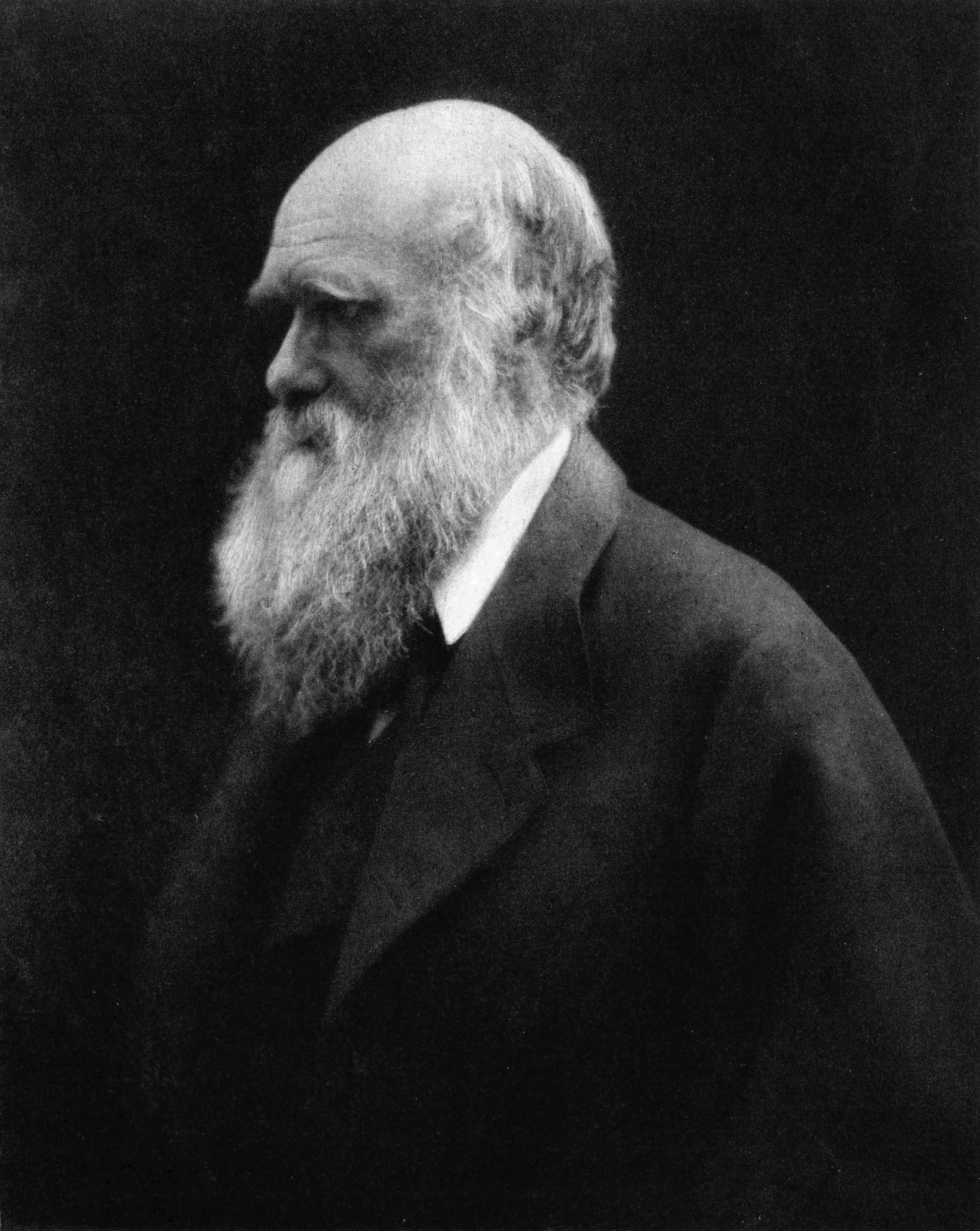
    Charles Darwin
    The scientist traced the evolution of species in this planet starting from ice age which they say, it started as a single cell organism, became a fish, birds, mammals and finally human beings. They say the fish took risk by coming out of the water and became a reptile which took risk and started flying as birds and so on. Risk taking is our innate nature and the legacy passed on by our predecessors. Somewhere down the lane we all settled down to our slumber and lost our ability to come out of our comfort zone and take risk. 

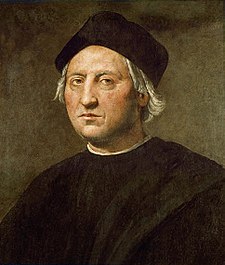
    Christopher Columbus
    Columbus set out his sails towards west in the Atlantic Ocean risking his and fellow sailors life and found the great land later became United States of America. Columbus risk taking discovered the un-founded land. Later all risk takers from many countries followed the path shown by Columbus and migrated to this new found land. They built the great nation as super power in less than 500 years. Few critics say that those who could not succeed in their home land have run away to US on those days.

    Wilbur Wright 
    I personally don’t subscribe to this view for the simple reason; if it is true, that land would not have given motor car, jet plane and space craft to mankind. Most of the scientific inventions like electric bulb, nuclear energy and so on are from that great nation which had created an environment where people have freedom to think. Freedom encourages risk taking which leads to prosperity.

    Let’s look at an Indian example for the same point “Risk takers create prosperity”. In India Mumbai contributes to 10% of countries GDP and it houses approximately 1.5% of Indian population. Most of the people in this great city have ventured to leave their home land, migrated to this place and created a cosmopolitan city. Today Mumbai is one of the commercial cities in the world which has the largest people who left their native place and got adjusted to the fast life style of this great city. This is yet another proof that wherever the land is occupied by “Risk takers” it will be a prosperous place.

    I would not have the audacity to say that I am a risk taker. I still stay with egg fried rice after reviewing the menu card several times! Still I can narrate the little progress I made by taking risk in my 60 years of human existence. I rocked the boat every time I turned out a decade of my human existence. At 20 I rocked the boat by migrating from my home town to Chennai to work in a design department of TAFE which was my baby step to learn this art of challenging the status-quo.

     At 30 when I am married with a daughter, I went back to evening college to continue my engineering education and continued my educational pursuits till I finished my Research in IIT. I was virtually riding 3 horses for nearly 10 years namely my job, family and education trying to excel in all avenues. When I came out of my college I was 38!

    At 40 I left my lucrative job from Lucas-TVS and shifted to Bombay which was not the characteristic of a typical south Indian at 40s. It was a risk in real sense as my children were grown up and had to study local languages in Maharashtra. I am of the view that you need not have been frustrated to rock the boat – you can be full and contended while you explore new avenues. The main point is becoming uncomfortable with calmness! Strange thing; but it works well.

    In the words of Swami Chimayananda “Nature’s plan is activity – Inactivity is death – If you keep your arm in a sling at rest for few days, you cannot even move your fingers; this itself is the proof that nature’s plan is activity while the organism is alive. You have to act and you must as long as you are alive”

    The pinnacle of my “Rocking the boat” has happened when I was almost 50 when I wanted to build an institution which will facilitate Indian industries to transform as a customer focused organizations. When this idea hatched in my mind, my daughter was due for her marriage and my son was in his engineering college. I hardly had money for settling my mortgages from my final settlement of leaving my job.

    I am from a typical south Indian community which is known to be in service and hardly encouraged to become an entrepreneur. People close to me said I was insane to leave my job when I was a star performer and enough positions left in my corporate career. The only person stood always on my side was my wife Meera who encouraged all my “Rocking the boat” episodes. The only investment I had while I founded Six Sigma Alchemy (P) Ltd (SSA) was my determination and obsession for success.


    Today, SSA is a well known Business Excellence consulting company facilitating many corporate to inculcate business excellence practices. If you are pursuing a lofty vision, the whole universe will conspires to support you to succeed. It is evident from the fact that SSA has 25 professionals pursuing my dream to build a World class consulting company. All my family members are in the management team of SSA carrying on the legacy I will be leaving behind. If I have not chosen to “Rock the boat” probably I would have missed the opportunity to explore the hidden potential in me and many other youngsters working for building this great institution called SSA.

    I am of the view that we have taken human form to act and according to me there is nothing called “hanging the boot” till nature takes its decision to call you back. I wish to conclude this episode with the French essayist Michel Eyquem de Montaigne:
    “The value of Life lies not in the length of days, but in the use we make of them; a man may live long yet live very little” 
      
    In summary:
    • There is a Columbus in you waiting to manifest to explore the unfounded avenues.
    • Status-quo gives a notional comfort and be aware of it for mediocrity.
    • Risk taking is our innate nature passed by our legacy.
    • "Rocking the boat” is challenging the status quo for new ways of thinking & working
    •  You can discover great potentials only when you cross your comfort zones.
    •  Growth is directly proportional to risk – higher the risk; higher the growth.
    •  Freedom encourages risk taking – encourage your children to explore the   unknown
    • If you wish to be 100% successful all the time, you develop risk aversion and settle down to mediocrity.
    • The only way to avoid mistake is “not trying anything at all!”
    • Forgive yourself for a failure – after all Edison failed 1200 times before he could find the great invention of an electric bulb.   
    • Finally, watch out for comfort zone resulting out of “status-quo” and “Rock the boat” to challenge them.
    • When everyone settles down for “Comfort zones”, a Leader looks for “Rocking the boat”   
    • Rock the boat and progress in Life to figure out your un-explored potentials.


    Look forward to share more tips on Leadership. See you next week. Till then Good bye.

    Jai Gurudev
    NC        

    CHANGE MANAGEMENT

    NOT INVENTED HERE SYNDROME NIHS’ - acronym of ‘Not Invented Here Syndrome’ is killer for best practices adoption. Human beings are rebelliou...